World Thrombosis Day campaign urges global action to protect women against blood clots
Global campaign brings together partners to raise awareness of women's unique blood clot risks, recognize warning signs and take action to prevent life-threatening events.
CHARLOTTE, N.C., Oct. 13, 2026 /PRNewswire/ -- One in four people worldwide die from conditions caused by thrombosis, yet blood clots remain among the most overlooked and misunderstood serious health threats. On World Thrombosis Day, October 13, thousands of partners around the world unite to raise awareness of the warning signs, risk factors and importance of timely care. This year, the global campaign puts women's health in focus, highlighting how blood clot risk can change throughout a woman's life, from reproductive health and pregnancy through the postpartum period, perimenopause, menopause and beyond.
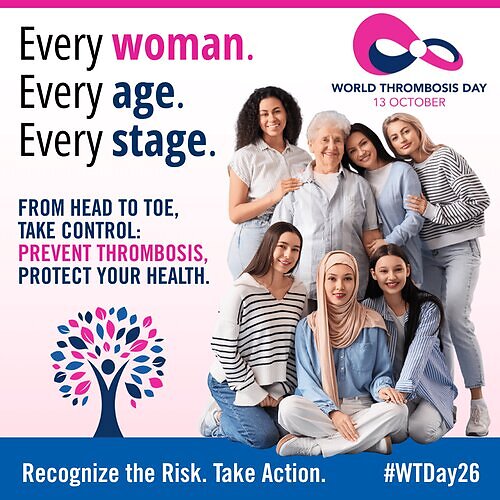
World Thrombosis Day is a global movement led by the International Society on Thrombosis and Haemostasis (ISTH), bringing together a global community of more than 21,000 thrombosis professionals, advocates and partners to advance the understanding, prevention, diagnosis and treatment of blood clots.
"World Thrombosis Day is more than just one day of awareness. It is a global movement that brings together healthcare professionals, patients, caregivers, advocates and communities to help reduce the impact of blood clots," said James Douketis, M.D., Chair of the ISTH World Thrombosis Day campaign. "This year, we are particularly focused on helping women understand that their risk of blood clots can evolve throughout their lives and that awareness, risk assessment and timely action can make a difference."
Women's risk of developing a blood clot can change throughout life, influenced by hormonal changes, pregnancy, the postpartum period, hormonal medications, surgery and periods of limited mobility. During pregnancy, women are approximately five times more likely to develop a blood clot, with risk remaining elevated after delivery.
More broadly, up to 60% of venous thromboembolism (VTE) cases occur during or within 90 days of hospitalization, underscoring the importance of recognizing risk and taking preventive measures before, during and after hospital care. Women should discuss their individual blood clot risk with a healthcare professional and explore educational resources available from the campaign.
The World Thrombosis Day campaign calls on communities around the world to take action to improve awareness of blood clot risks. Helping women understand these risks, recognize the signs and symptoms of blood clots and know when to seek medical care can help prevent serious complications and save lives. For information about women's unique blood clot risks, including educational resources and shareable materials, visit www.worldthrombosisday.org/women-blood-clots/.
To learn more about the World Thrombosis Day campaign and how to get involved, visit www.worldthrombosisday.org.
About the ISTH
Founded in 1969, the International Society on Thrombosis and Haemostasis (ISTH) is the leading global medical and scientific organization dedicated to advancing the understanding, prevention, diagnosis and treatment of conditions related to thrombosis and hemostasis. The ISTH convenes and supports a global community of more than 21,000 clinicians, researchers, educators and healthcare professionals across more than 120 countries to advance science, improve patient care and drive progress in thrombosis and bleeding disorders worldwide. Through its scientific leadership, education, peer-reviewed publications, clinical guidance, expert committees, global partnerships, advocacy initiatives, meetings and congresses, and World Thrombosis Day, the ISTH serves as a trusted international voice for the field. Learn more at www.isth.org.




Share this article