Terminal Tractor Market worth $ 2.39 billion by 2033 | MarketsandMarkets™
DELRAY BEACH, Fla., July 21, 2026 /PRNewswire/ -- According to MarketsandMarkets™, the global terminal tractor market is projected to grow from USD 1.65 billion in 2026 to USD 2.39 billion by 2033, at a CAGR of 5.4%.
Browse 145 market data Tables and 89 Figures spread through 389 Pages and in-depth TOC on "Terminal Tractor Market"
Terminal Tractor Market Size & Forecast:
- Market Size Available for Years: 2026-2033
- 2026 Market Size: USD 1.65 billion
- 2033 Projected Market Size: USD 2.39 billion
- CAGR (2026–2033): 5.4%
Terminal Tractor Market Trends & Insights:
- The diesel segment is projected to account for the largest share of the global terminal tractor market, by propulsion, in 2033.
- The warehouse & logistics segment to lead the global terminal tractor market, by application, during the forecast period.
- Europe is projected to be the second-largest market for terminal tractors throughout the forecast period.
Download PDF Brochure: https://www.marketsandmarkets.com/pdfdownloadNew.asp?id=153834794
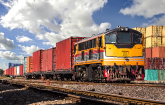
The terminal tractor market is driven by rising cargo volumes across ports, increasing automation in warehouse and logistics operations, and expanding ground handling requirements at airports worldwide. North America is projected to be the largest market during the forecast period, with growth driven by the expansion of intermodal transportation hubs and growing e-commerce fulfillment activity, which is increasing the need for faster and more efficient freight movement across terminals and logistics facilities. In parallel, Europe's strong focus on sustainable transportation, along with rapid urbanization across Asia Pacific, is driving adoption of electric terminal tractors. The global rise in rail freight transport has also increased the demand for terminal tractors in rail logistics. Growing movement of consumer goods, automotive vehicles and components, and containerized freight through intermodal rail networks has increased trailer handling activities within rail terminals, as terminal tractors enable efficient movement of trailers and containers between rail yards, storage areas, and loading zones, improving terminal productivity and reducing turnaround times.
The diesel segment is projected to account for the largest share of the global terminal tractor market, by propulsion, in 2033.
By propulsion, the diesel segment is projected to account for the largest share of the global terminal tractor market in 2033. This dominance is primarily driven by the proven diesel engine technology, with an advantage of high torque, long runtime without recharging, and proven durability for continuous, heavy-duty container and trailer handling. Industries such as shipping, logistics, manufacturing, retail, and automotive continue to rely on diesel terminal tractors for heavy-duty yard operations, owing to high cargo handling requirements and the need to maintain cost-efficient operations.
Diesel Terminal tractors in the 200 to 300 HP range are the most widely preferred across North America and Europe, where marine ports, intermodal rail terminals, and large logistics hubs require high tractive effort, extended operating hours, and uninterrupted multi-shift operations. In many Asia Pacific markets, diesel continues to dominate medium duty industrial, warehouse, and port applications due to its proven reliability and readily available refueling infrastructure. As emission regulations have become more stringent, OEMs and engine manufacturers have upgraded diesel powertrains with advanced technologies to comply with regional standards while maintaining performance. In Europe, most newly manufactured diesel terminal tractors are equipped with EU Stage V-compliant engines, while North America has largely adopted US EPA Tier 4 Final engines, and manufacturers in Asia Pacific are progressively aligning products with increasingly stringent national non-road emission regulations. Supported by its ability to deliver high productivity in demanding applications while meeting evolving emission requirements, diesel is expected to remain the preferred propulsion choice for terminal tractor fleets across most global markets during the forecast period.
Request Sample Pages: https://www.marketsandmarkets.com/requestsampleNew.asp?id=153834794
The warehouse & logistics segment to lead the global terminal tractor market, by application, during the forecast period.
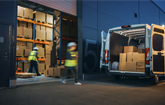
The warehouse & logistics segment is projected to hold the largest share and register the fastest growth in the global terminal tractor market during the forecast period. The rapid expansion of large-scale fulfillment centers, regional distribution hubs, and cross-docking facilities is increasing the need for frequent trailer repositioning within logistics yards. Sectors including e-commerce and retail, food & beverages, pharmaceuticals & healthcare, automotive, and heavy manufacturing are handling higher volumes of time-sensitive and high-value cargo, requiring faster trailer exchange between warehouses, loading docks, and transportation networks. Terminal tractors enable continuous yard operations by minimizing dock congestion, reducing trailer waiting time, and improving asset utilization, making them an integral part of modern yard management systems. The growing adoption of automated warehouses, integrated distribution campuses, and omnichannel supply chains is expected to strengthen demand for terminal tractors further, thereby ensuring that the warehouse & logistics application remains the largest and fastest-growing segment throughout the forecast period.
Europe is projected to be the second-largest market for terminal tractors throughout the forecast period.
Europe is projected to be the second-largest market for terminal tractors during the forecast period, with Germany leading due to its growing manufacturing sector and the presence of key OEMs such as Kalmar (Finland), Terberg Special Vehicles (Netherlands), TICO (US), Capacity Trucks (US) and MAFI (Germany). The region's focus on automation is reflected in facilities such as the HHLA Container Terminal Altenwerder in Hamburg, which operates 95 fully automated, battery-powered AGVs alongside advanced OCR systems. Electric terminal tractors deployed across major ports and logistics hubs in countries such as Germany, the Netherlands, Belgium, and Sweden are predominantly equipped with 150 to 250 kWh and above battery capacity, enabling full shift or opportunity-charged operations in high-utilization environments. Lithium Iron Phosphate (LFP) batteries are increasingly preferred due to their longer cycle life, high thermal stability, and suitability for frequent charging and continuous yard operations, while Nickel Manganese Cobalt (NMC) batteries are also used where higher energy density and longer operating range are required. For instance, Kalmar offers electric terminal tractors with battery capacities of up to 290 kWh for demanding port and logistics operations, while Terberg's electric YT series is available with battery systems designed for full shift operation and opportunity charging. These platforms are primarily deployed by European ports and logistics operators seeking to reduce emissions while maintaining high equipment utilization and operational productivity. As European ports and logistics operators accelerate fleet electrification and invest in zero-emission cargo handling equipment, demand for electric terminal tractors equipped with high-capacity battery systems is expected to increase, supporting Europe's position as the second-largest regional market during the forecast period.
Inquire Before Buying: https://www.marketsandmarkets.com/Enquiry_Before_BuyingNew.asp?id=153834794
Top Companies in Terminal Tractor Market:
The Top Companies in Terminal Tractor Market are Kalmar (Finland), Terberg Special Vehicles (Netherlands), TICO (US), Capacity Trucks (US), and MAFI (Germany) are the top 5 players in the terminal tractor market.
Browse Adjacent Market: Automotive and Transportation Market Research Reports & Consulting
Related Reports:
About MarketsandMarkets™
MarketsandMarkets™ has been recognized as one of America's Best Management Consulting Firms by Forbes, as per their recent report.
MarketsandMarkets™ is a blue ocean alternative in growth consulting and program management, leveraging a man-machine offering to drive supernormal growth for progressive organizations in the B2B space. With the widest lens on emerging technologies, we are proficient in co-creating supernormal growth for clients across the globe.
Today, 80% of Fortune 2000 companies rely on MarketsandMarkets, and 90 of the top 100 companies in each sector trust us to accelerate their revenue growth. With a global clientele of over 13,000 organizations, we help businesses thrive in a disruptive ecosystem.
The B2B economy is witnessing the emergence of $25 trillion in new revenue streams that are replacing existing ones within this decade. We work with clients on growth programs, helping them monetize this $25 trillion opportunity through our service lines – TAM Expansion, Go-to-Market (GTM) Strategy to Execution, Market Share Gain, Account Enablement, and Thought Leadership Marketing.
Built on the 'GIVE Growth' principle, we collaborate with several Forbes Global 2000 B2B companies to keep them future-ready. Our insights and strategies are powered by industry experts, cutting-edge AI, and our Market Intelligence Cloud, KnowledgeStore™, which integrates research and provides ecosystem-wide visibility into revenue shifts.
To find out more, visit www.MarketsandMarkets™.com or follow us on Twitter, LinkedIn and Facebook.
Contact:
Mr. Rohan Salgarkar
MarketsandMarkets™ INC.
1615 South Congress Ave.
Suite 103, Delray Beach, FL 33445
USA: +1-888-600-6441
Email: sales@marketsandmarkets.com
Visit Our Website: https://www.marketsandmarkets.com/





Share this article