Roma Administration Officially Presented in The Hague as a Solution to Missing Source Documentation
THE HAGUE, Netherlands, July 7, 2026 /PRNewswire/ -- The Roma Identity & Archive Infrastructure was presented in The Hague as an administrative solution for Roma who are unable to sufficiently demonstrate their identity, origin or family history due to the absence of required source documents. The infrastructure is being further developed by the Roma Intelligence & Administration Agency (RIAA) in cooperation with Royal Joh. Enschedé. The Embassy of the United Roma Tribes supports the institutional, diplomatic and international development of the ecosystem.


The first Dutch implementation focuses on Roma who cannot be sufficiently identified through existing state administrative records. The RIAA establishes a robust Roma population register, enabling Roma personal records to be verified and official source documents to be issued following registration, verification and archiving.
Official government authorities, including Dutch migration and identification services, can use this information to identify individuals of Roma origin.
The absence of reliable and robust registration of Roma populations has constituted a practical challenge for decades, affecting not only the individuals concerned but also governments and identification authorities.
Following implementation in the Netherlands, the objective is to make this methodology gradually available to Roma communities worldwide and to foreign authorities responsible for establishing identity, nationality, origin or family history, including immigration and naturalisation services, identification authorities, embassies, consulates and civil registry offices. In the longer term, the infrastructure is intended to become voluntarily available to Roma who wish to document, verify and sustainably preserve their identity, family history and cultural heritage.
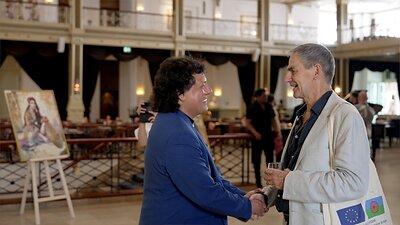
During the gathering at the Grand Hotel Amrâth Kurhaus, the issue was examined from several perspectives. Milutin Pavlovic, participant in the Dutch verification programme for Roma without a source document, described the personal impact in the accompanying video documentation:
"Everyone has a passport or a country they identify with, and in my case I don't. So even after living here for almost fifty years, I still feel as though I am searching. Do I really belong here?"
Peter Jorna, cultural anthropologist, placed the issue in a broader societal context:
"I believe we live in a world and a time where identity is of tremendous importance. The Roma have their own identity, culture and values, yet these remain largely unknown and deserve to be better understood."
The digital implementation was presented by Niels Sondervan, technical specialist, who emphasised that reliable source information forms the foundation of every identity document:
"An identity document is ultimately the highest document of trust. The source document therefore forms the starting point, enabling people to demonstrate: 'I am who I am.'"
Enrollment was described as the controlled registration and verification of personal data, biometric data and source information. This creates a robust administrative foundation that remains verifiable and accessible.
Representing Royal Joh. Enschedé, Adriaan Kamphorst addressed data integrity and secure document production:
"This can help other authorities verify that the person is indeed the individual identified on the document and that the document itself is authentic. Based on that information, another document, such as a passport or travel document, can subsequently be issued."
Following these presentations, the respective responsibilities within the institutional ecosystem became clear. The RIAA is responsible for registration, dossier development and archiving. The Roma Embassy fulfils a role in institutional representation, cultural continuity and diplomacy. Royal Joh. Enschedé contributes expertise in digital identity and the technical implementation of registration, storage, digital infrastructure and secure document production.
In the next phase, international, philanthropic and civil society partners already investing in Roma communities, identity, documentation, heritage preservation, administrative inclusion and sustainable development will be identified. This includes programmes and funds within or connected to the United Nations (UN), the European Union (EU) and other institutions whose existing investments may be strengthened and made more sustainable through this infrastructure.
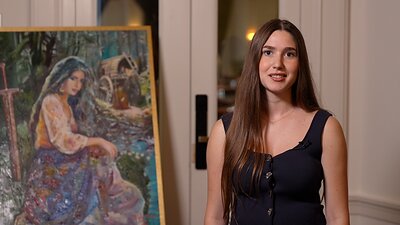
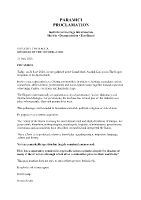
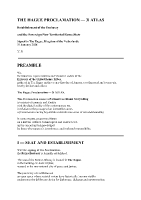
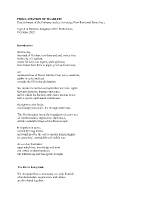
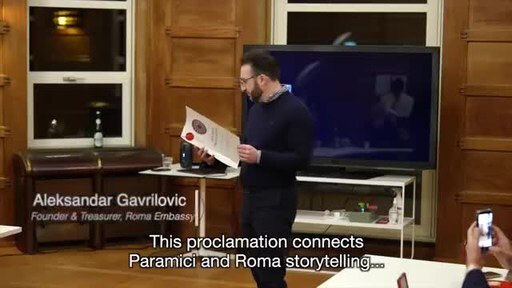
Cultural heritage also formed part of the programme. Maja Familic's painting collection, 'Roma Woman Through the Epochs', was exhibited during the gathering. Among the international participants and interviewees were Santino Spinelli, Adrian Gaspar and Janos Lang. Justine Verhoog, representing the Municipality of The Hague, and Dr. Raymund Schütz of the Municipal Archives of The Hague were also in attendance. The Paramici Proclamation was formally recited by Hristiyan Mitkov.
In one of the interviews, Sanja Mrdjan addressed both older and future generations:
"My message to the older generation will be, don't worry! We are proud to be Roma! And we will make the rest of the world proud that Roma people exist and for everything we do to contribute to the whole world."
Videolink 1: https://www.youtube.com/watch?v=X16etvtDHBc
Videolink 2: https://www.youtube.com/watch?v=UMJjHA4yzW0





Share this article