Personal Alarms Australia Launches Mobile 4G Devices for Emergency Support
Most falls occur in public spaces, but many detection systems work only within a small radius of the home. Personal Alarms Australia aims to support mobility while ensuring a level of fall protection wherever someone may be.
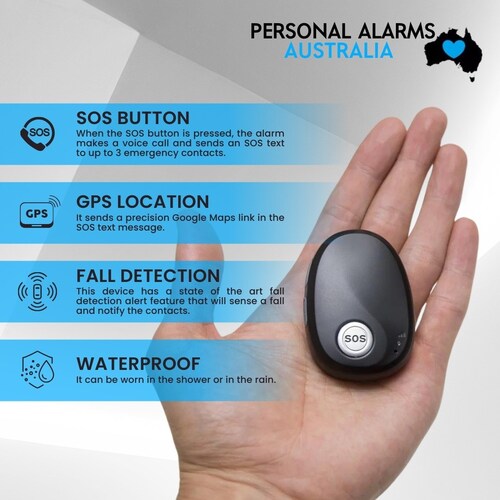
SYDNEY, June 10, 2026 /PRNewswire/ -- Personal Alarms Australia recently launched a line of mobile 4G devices for emergency support, built to help older Australians respond to falls. These wearables are designed to operate beyond the home, where the majority of incidents occur. With GPS location sharing, SOS calling, two-way voice communication, and automatic fall detection, these devices may help users access support more quickly after a fall.
Facing a Challenge in Alarm Pendants
Alert wearables tend to rely on landline phones installed in the user's homes, which send a message to the base station to initiate a call for help. While this is a functional system, for older adults who move beyond the operating range of the base station, usually between 52 and 100 meters, the system fails to function. Since most falls happen outside of the home, this is a significant shortcoming.
Developing a Solution for the Distance Problem
Personal Alarms Australia has based its technology on 4G mobile connectivity, directly integrated into the personal alarm device. Using a Telstra prepaid SIM card, the personal alarm pendant is designed to operate independently of base stations by accessing the 4G network directly. When the SOS button is pressed, the device sends a text with GPS coordinates accurate to one meter and calls emergency contacts in priority order with two-way voice communication.
The medical alert wristwatch contains the same technology as the pendant in the form of a watch. One major advantage of the watch as opposed to the pendant is that a watch tends to be worn continuously and therefore isn't often forgotten. On the other hand, a pendant might be taken off when arriving home.
Both of these devices are equipped with automatic fall detection. If sensors detect a common fall pattern, the emergency sequence will automatically trigger, even if no one presses either device's button. In instances involving loss of consciousness or disorientation, this feature could prove to be invaluable.
Government Funding for Safety Technology
For some older Australians and their families, the cost of a personal alarm may seem prohibitive. However, these systems can be covered by government programs for eligible persons. The National Disability Insurance Scheme (NDIS), Home Care Packages, and Commonwealth Home Support Programme (CHSP) each contain funding categories for assistive technology.
Safety That Supports Freedom
Every year in Australia, older adults face fall risks ranging from wet and winter weather to joint pain. Availability of technology should not limit a person's ability to move freely; rather, that technology should ensure that one feels secure against a potential fall. Mobile systems provided by Personal Alarms Australia support independence, while serving as a safety measure should the need arise.
About Personal Alarms Australia
Personal Alarms Australia is a 100% Australian-owned business serving customers nationwide from Salamander Bay, New South Wales. The company offers affordable personal alarm solutions, including 4G mobile pendants and medical alert watches with GPS tracking and automatic fall detection, available through NDIS, Home Care Packages, and CHSP funding programs.
Media Contact
Brooke Ellis,
Senior Executive
info@PersonalAlarmsAus.com.au

Share this article